









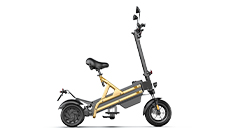

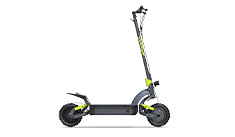

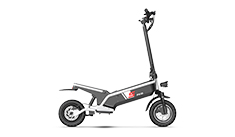

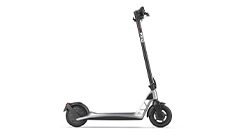


The Two-Wheel Electric Mobility Market Reaches a New Energy Inflection Point
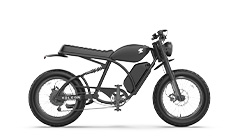
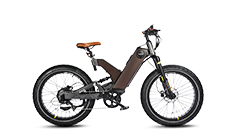
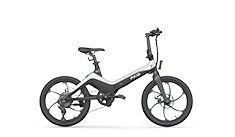
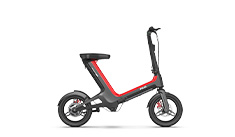
The global two-wheel electric mobility market is undergoing a profound technological shift. From e-bikes designed for urban commuting and electric motorcycles built for short-to-medium range travel, to compact and versatile electric scooters and cargo two-wheelers engineered for last-mile delivery — the performance demands placed on battery systems are being systematically redefined.
Longer range, faster charging, enhanced safety, and reduced vehicle weight: these four imperatives have long defined the core product and engineering challenges facing e-bike OEM and electric scooter ODM manufacturers worldwide. The accelerating commercialization of solid-state battery technology is now offering a structural answer to all four.
Solid-State vs. Conventional Lithium Batteries: Key Advantages for Two-Wheel Applications
Today's mainstream two-wheel electric vehicles predominantly run on lithium iron phosphate (LFP) or ternary lithium (NMC) battery chemistries, with energy densities of approximately 150–210 Wh/kg and 250–350 Wh/kg respectively — both approaching the material limits of liquid-electrolyte systems.Solid-state batteries replace the liquid electrolyte with a solid-state equivalent, fundamentally breaking through this ceiling.
|
Performance Dimension |
Conventional Liquid Lithium Battery |
Solid-State / Semi-Solid Battery |
Significance for Two-Wheel Applications |
| Energy Density | 150–350 Wh/kg | 300–600 Wh/kg | Range extended by 50%–100%; battery pack weight reduced |
| Safety | Flammable electrolyte; thermal runaway risk | No liquid flammables; inherently safe | Lower spontaneous combustion risk; improved export compliance |
| Charging Speed | Typically 1–4 hours | Supports 5–15 minute fast charging | Dramatically improved efficiency for battery-swap and fast-charge operations |
| Operating Temperature | Performance degrades significantly below -20°C | Stable from -30°C to 100°C | Suitable for European winters, Southeast Asian heat, and other multi-climate markets |
| Cycle Life | 500–1,500 cycles | 3,000+ cycles | Lower total cost of ownership over the vehicle's full lifecycle |
Data sourced from: East Money, OFweek Lithium Battery Network, Qianzhan Industry Research Institute (2025–2026)

Early Commercial Validation: Solid-State Batteries Are Already Entering the Two-Wheel Segment
The integration of solid-state batteries into two-wheel electric mobility is no longer a distant prospect. Commercial early-mover cases have already emerged in 2025–2026:
Electric Motorcycle First Mover: Finnish company Donut Lab delivered the Verge TS Pro electric motorcycle equipped with an all-solid-state battery in Q1 2026, achieving a range of 600 km — marking a completed engineering validation of solid-state technology in a high-performance two-wheel platform.
E-Bike Battery-Swap Scaling: Beijing Pure Lithium New Energy Technology Co., Ltd. is advancing a solid-state battery swap program for electric bicycles, with plans to expand to 100 swap stations, 1,000 e-bikes, and 1,500 battery packs in the Yizhuang district, with a roadmap to replicate the model nationally — demonstrating the commercial viability of solid-state batteries in two-wheel battery-swap operations.
Mass-Production Supply Chain Now Online: Xinjie Energy's Hangzhou facility completed its first-phase 2 GWh solid-state lithium metal battery production line in early 2026, serving applications including drones, electric bicycles, and electric motorcycles.The two-wheel solid-state battery supply chain has officially entered mass-production readiness.

Strategic Implications for OEM / ODM Manufacturers: Move Early, Win the Window
For manufacturers specializing in e-bike OEM, electric motorcycle ODM,electric scooter, and cargo two-wheeler production and customization services, solid-state battery commercialization represents far more than a component upgrade — it is a systemic opportunity to reimagine vehicle architecture and market positioning.
1. Lightweight Vehicle Design Becomes Achievable A 50%–100% improvement in energy density means that for the same target range, battery pack volume and weight can be substantially reduced. This unlocks new degrees of freedom in weight reduction and industrial design for electric scooters and lightweight e-bikes, directly strengthening product competitiveness and export premium potential.
2. Growing Demand for Premium Custom Solutions Major export markets — including the EU and North America — are tightening safety standards for two-wheel electric vehicles (EN 15194, UL 2849, and related certification frameworks). The inherent safety characteristics of solid-state batteries will become a defining selling point for OEM/ODM orders targeting premium markets. Manufacturers capable of integrating solid-state battery solutions will hold a measurable advantage in European and North American procurement decisions.
3. Differentiated Positioning in the Cargo Two-Wheeler Segment Urban delivery applications place far higher demands on range and payload capacity than standard commuter vehicles. The high energy density and wide operating temperature range of solid-state batteries enable cargo e-bikes and cargo electric motorcycles to sustain reliable performance across all-weather, long-distance delivery scenarios — offering a more compelling total vehicle proposition to global express, food delivery, and B2B logistics customers.
4. Fast Charging Capability Redefines Shared Mobility Operations Shared e-bike and electric scooter operators are acutely sensitive to battery turnaround efficiency. The 5–15 minute fast-charging capability of solid-state batteries will fundamentally transform existing battery-swap and charging operation logic, providing OEM manufacturers with a differentiated product definition advantage in the shared mobility supply chain.

Commercialization Timeline: Key Milestones for the Two-Wheel Industry
|
Timeline |
Industry Progress |
Impact on Two-Wheel OEM / ODM |
| 2025–2026 | Semi-solid batteries in mass production; suppliers such as Xinjie Energy bring GWh-scale lines online | Begin product certification and supply chain integration for semi-solid battery platforms |
| 2026–2027 | All-solid-state batteries enter small-batch vehicle validation; sulfide electrolyte price drops to ~¥5,000/kg | Initiate custom all-solid-state battery solution development for premium two-wheel models |
| 2028–2030 | All-solid-state batteries reach volume production; costs enter commercially viable range | Full product line upgrade to solid-state battery platforms across mid-range two-wheel EVs |
Sources: Qianzhan Industry Research Institute; Dongwu Securities "Electric Vehicle Mid-Year Strategy 2025"; OFweek Lithium Battery Network
Challenges and Selection Guidance
At this stage of development, two-wheel OEM/ODM manufacturers evaluating solid-state battery solutions should remain attentive to the following practical constraints:
Cost Management: Solid-state electrolyte costs remain several times higher than conventional liquid-electrolyte equivalents. The most commercially rational approach is to prioritize solid-state adoption in premium vehicle segments or safety-critical export customization projects, where cost premiums can be offset by market positioning.
Semi-Solid as a Transitional Strategy: For manufacturers with near-term volume production requirements, semi-solid battery configurations — combining oxide or polymer materials with liquid electrolyte — are compatible with existing production line processes and offer a more favorable cost-performance ratio. This represents the most immediately deployable technology pathway for the two-wheel industry through 2026–2027.
Certification Planning Cycles: Solid-state battery cells must pass certification frameworks including UN38.3, CE, and UL. It is strongly recommended that OEM manufacturers initiate certification planning in parallel with cell supplier engagement, allowing a 12–18 month window for testing and formal approval.
The Technology Upgrade Window Is Open — Act with Purpose
Solid-state batteries will not replace all liquid lithium batteries overnight. However, they are actively redefining the competitive standard for the next generation of two-wheel electric mobility products. For e-bike, electric motorcycle, electric scooter, and cargo two-wheeler OEM and ODM manufacturers, this is the critical window to establish technology readiness, secure supply chain relationships, and lock in product roadmaps.
Manufacturers that integrate solid-state battery platforms into their product strategy today will be positioned to lead the premium market over the next two to three years.
PXID is a dedicated OEM and ODM partner for the global two-wheel electric mobility industry, offering end-to-end customization services from vehicle design and battery solution selection through to volume production and delivery. We continuously monitor the frontier of global battery technology to help our clients build products that lead their markets. For technical partnership inquiries, please contact our business development team.
Sources & Further Reading:
●Qianzhan Industry Research Institute, China Solid-State Battery Industry Panorama 2025: https://www.qianzhan.com/analyst/detail/220/250421-639dda3a.html
●OFweek Lithium Battery Network, Solid-State Battery Capacity Race Opens 2026: https://libattery.ofweek.com/2026-02/ART-36008-8500-30681514.html
●East Money, Solid-State Lithium Metal Batteries Accelerate Toward Commercialization 2025–2026: https://caifuhao.eastmoney.com/news/20260125194841675065700
●Dongwu Securities, Electric Vehicle Mid-Year Strategy 2025: https://www.fxbaogao.com/detail/4944609
●Beijing Economic and Technological Development Zone, Pure Lithium New Energy Expands Solid-State Battery Applications: https://kfqgw.beijing.gov.cn/ywdt/kjcgzhgd/kjqy/202602/t20260224_4537304.html
FAQ
They provide higher energy density, faster charging, and improved safety. PXID integrates these batteries to enhance vehicle range and reduce weight.
Without flammable liquid electrolytes, they mitigate fire risks and comply with international safety standards. PXID ensures full compliance for export-ready models.
Yes, solid-state technology enables 5–15 minute fast charging, optimizing shared mobility operations. PXID equips scooters to leverage this efficiency.
Their high energy density and wide temperature range allow stable all-weather, long-distance operation. PXID designs cargo e-bikes for peak performance with these batteries.
By 2028–2030, costs will enter acceptable ranges, enabling mid-tier electric two-wheelers to adopt solid-state solutions.
Semi-solid batteries using oxide or polymer composites offer cost-effective, compatible options for 2026–2027 deployment. PXID guides OEMs through integration planning.
Higher energy density allows smaller, lighter battery packs, enabling lightweight designs and better export competitiveness.
Europe and North America, where safety and high-end standards are strict, gain competitive advantages. PXID tailors solutions for these regions.
UN38.3, CE, and UL certifications are essential. PXID coordinates testing and certification planning with suppliers.
Early integration secures first-mover advantages in high-end markets, reduces future development risks, and strengthens product differentiation. PXID offers end-to-end support for seamless adoption.
For more information about PXID ODM services and successful cases of electric bicycles, electric motorcycles, and electric scooter design, and production, please visit https://www.pxid.com/download/
or contact our professional team to obtain customized solutions.
 Facebook
 Twitter
 Youtube
 Instagram
 Linkedin
 Behance
 tiktok

