





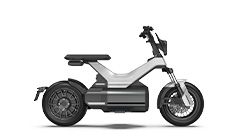

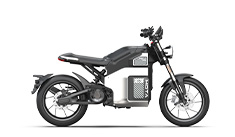

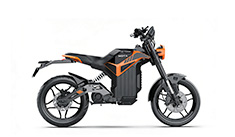

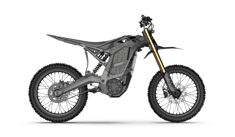

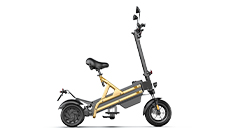





A 20-inch folding e-bike can shorten the distance between a sidewalk, an apartment hallway, a car trunk and a desk. But “folding” describes geometry, not effortless portability. A useful buying decision starts with the constraints around the bicycle: how many stairs it must cross, where the battery can be charged, how far the rider travels in poor weather, and which roads or trails allow the bike’s operating class.
| Check | LIGHT-P4 fact | What the buyer should verify |
|---|---|---|
| 1. Storage path | Folding frame and stem | Door, elevator, hallway and vehicle clearances; confirm final folded dimensions before publishing |
| 2. Lifting | 49 lb / 22.2 kg listed weight | A 49 lb bicycle may be manageable for rolling storage but difficult on stairs |
| 3. Daily distance | 34–70 mile claimed range | Plan from the low end and keep a 25–30% reserve for weather, hills and battery aging |
| 4. Charging | 36V 10.5Ah or 14Ah removable battery; 42V 2A charger | Use only the supplied or approved charger and supervise charging |
| 5. Rider fit | 5 ft 4 in–6 ft 2 in; seat 31.4–35.8 in | Check inseam, reach, knee angle and low-speed handling—not height alone |
| 6. Control | Seven speeds; PAS 0–5; 160 mm mechanical or hydraulic disc option | Confirm the exact SKU, brake option, tire pressure and pre-delivery adjustment |
| 7. Legal access | Thumb throttle; product-page speed limit 15.5 mph | Confirm class label and state/local access rules for the delivered U.S. configuration |

Product source: MARSANT’S X LIGHT-P4 U.S. product page
The useful takeaway: P4 is best understood as a compact, equipped city bike that folds. The fold reduces storage footprint; it does not erase the mass of the motor, battery, rack, fenders, lights, drivetrain and brakes.
Conventional bicycle-market reports miss a significant share of direct-to-consumer and resale activity. PeopleForBikes estimated that roughly 450,000 direct-to-consumer e-bikes worth about $800 million were sold in 2024 outside conventional tracking. Adding approximately 80,000 peer-to-peer transactions brought the number of e-bikes bought or sold that year close to one million. That changes the competitive picture: digital product pages, assembly support, safety evidence and post-purchase service are part of the product, not just marketing support.
| U.S. signal | Current number | Implication for P4 content |
|---|---|---|
| DTC scale | ≈450,000 units / ≈$800 million in 2024 | Answer fit, assembly, battery, shipping and service questions before the shopper asks |
| Total activity | Nearly 1 million e-bikes bought or sold in 2024 | Differentiate on a complete use case, not generic “eco-friendly mobility” language |
| Resale preference | Commuter-oriented models were 54% of Upway resale sales | Lead with daily utility, storage and total ownership clarity |
| Participation | 112 million Americans—35% age 3+—rode at least once in 2024 | Write for new and returning riders, not only enthusiasts |
| Category share | E-bikes were about 7% of U.S. bicycle unit sales in 2024 | Growth potential remains, but category education is still necessary |
Safety evidence belongs near the buying decision
CPSC estimated 53,200 emergency-department-treated injuries involving e-bikes from 2017 through 2022, increasing from 3,500 in 2017 to 24,400 in 2022. Those are national estimates, not a measure of risk per mile. They still make one editorial point clear: braking, battery charging, assembly and maintenance should not be buried in the footer of an e-bike article.
LIGHT-P4 Product Advantages and Honest Limitations
| Product module | Verified P4 specification | User value | Boundary to state clearly |
|---|---|---|---|
| Compact utility | Folding frame/stem; rack, fenders and lights | One platform for riding, indoor storage and vehicle transport | Folded dimensions must be confirmed for the delivered SKU |
| Urban control | 250W geared hub; PAS 0–5; thumb throttle; seven speeds | Multiple cadence and assistance choices for stops, slopes and headwinds | Lower power and 15.5 mph tuning are not the choice for speed-first riders |
| Battery choice | 36V 10.5Ah or 14Ah; removable; 5–7 h charge | Charge indoors without moving the whole bicycle; choose capacity by route | Do not publish Wh until the product-page battery-card inconsistency is fixed |
| Fit and access | Low-step frame; seat 31.4–35.8 in; 5 ft 4 in–6 ft 2 in | Easier mounting and a broad adjustment range for household sharing | The FAQ and specification height language should be reconciled |
| Braking | 160 mm mechanical or hydraulic disc option; motor cut-off | Better wet-weather modulation potential than rim brakes when properly set up | The exact brake option must match the SKU, imagery and order confirmation |
| Load and packaging | 49 lb bike; 242 lb payload; 20 × 1.95 tires | Compact wheel package with commuter equipment | Payload includes rider and cargo; narrower tires trade cushion for a smaller footprint |

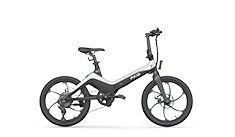
PXID design advantage: The visual identity comes from an integrated low-step magnesium frame, a concealed battery, a central fold and a commuter-ready rear section. Translate that design into buyer outcomes: easier mounting, removable charging, reduced storage footprint and fewer accessories to add after purchase.
A required fact correction before U.S. publication
The U.S. product page lists 36V 10.5Ah and 36V 14Ah battery options. Basic electrical math produces 378Wh and 504Wh, respectively. A separate marketing card currently shows lower Wh figures. The article should publish the voltage and amp-hour options—and the claimed 34–70 mile range—until engineering and commerce owners reconcile the Wh values at SKU level. The same gate should reconcile rider-height wording, brake configuration, return terms and warranty language across product, FAQ and policy pages.
These three bikes represent different decisions rather than a single “best” hierarchy. LIGHT-P4 favors balanced commuter equipment and seven-speed flexibility. Lectric XP Lite 2.0 emphasizes value, wider tires and a higher-output U.S. configuration. Brompton Electric C Line emphasizes a smaller premium folding system and lower listed weight at a much higher price. Prices and promotions can change, and the range figures below are not based on one test protocol.
| Item | LIGHT-P4 | Lectric XP Lite 2.0 Long-Range | Brompton Electric C Line |
|---|---|---|---|
| Listed price at review | $1,199 | $999 promotional page price | From $4,700 |
| Listed weight | 49 lb | 49 lb | From 39.5 lb |
| Motor | 250W geared hub | 300W rear hub; 819W peak; 28Nm | Product-family page does not present directly comparable output |
| Battery | 36V 10.5Ah / 14Ah | 375Wh / 672Wh | Configuration varies by current model |
| Claimed range | 34–70 miles | Up to 45 / 80 miles | Check current model configuration |
| Drivetrain | Seven speed | Single speed | Model configuration varies |
| Tires | 20 × 1.95 in | 20 × 2.5 in | Compact proprietary folding platform |
| Brakes | 160mm mechanical or hydraulic option | Hydraulic discs; 180mm rotors | Current specification should be checked by model |
| Payload | 242 lb | 275 lb | Check model-specific limit |
| Certification claim | Do not claim until certificate/mark is verified | Official page states UL 2849 / UL 2271 | Check exact U.S. model documentation |
| Best fit | Equipped seven-speed city utility | Value, wider tires and higher U.S. output | Premium compact folding and lower mass |
Battery Math and Three Real Commute Scenarios
Battery capacity should be compared in watt-hours, not amp-hours alone. The calculation is voltage × amp-hours. For P4, 36V × 10.5Ah equals 378Wh and 36V × 14Ah equals 504Wh. Because the live page contains a conflicting Wh card, these calculated values belong in the internal fact-check record until the SKU documentation is signed off. Range also depends on speed, assistance level, rider and cargo mass, temperature, wind, hills, tire pressure, stops and battery condition.

U.S. e-bike compliance is layered. Federal consumer-product law defines a “low-speed electric bicycle” as a two- or three-wheeled vehicle with fully operable pedals, a motor of less than 750W, and a motor-only maximum speed below 20 mph on a paved level surface under a 170 lb rider. That definition places qualifying products under CPSC consumer-product jurisdiction and bicycle requirements, including 16 CFR Part 1512. It does not decide every state class, path-access rule, helmet rule or local sales requirement.
| Layer | What it controls | What P4 must close |
|---|---|---|
| Federal product definition | Consumer-product jurisdiction and low-speed definition | Document operable pedals, motor rating and test configuration |
| State class law | Class 1/2/3 definitions, labels, age, helmet and access | Confirm the delivered throttle/speed configuration and label for each sales state |
| Local rule | City sales, charging, building or fleet requirements | Treat New York City as a separate evidence gate |
| Consensus safety standards | Electrical system and battery evaluation | Verify accredited lab certificates and marks before claiming UL compliance |
| Hazmat transport | Lithium battery testing and shipping documentation | Maintain UN 38.3 test summary and shipping classification for each battery SKU |
| Class | Typical definition | P4 editorial rule |
|---|---|---|
| Class 1 | Pedal-assist only; assistance up to 20 mph | Do not use if the delivered configuration has an active throttle |
| Class 2 | Throttle-capable; motor assistance up to 20 mph | P4 may resemble this pattern, but the state label and configuration must be verified |
| Class 3 | Pedal-assist; assistance up to 28 mph | Do not apply to a product page limited to 15.5 mph |
UL 2849 evaluates the combination of an e-bike electrical drive train, battery system and charger system. UL 2271 addresses batteries for light electric vehicle applications. These are different from the federal low-speed definition and from UN 38.3 transport testing. As of this document’s review date, CPSC’s June 2026 rulemaking is a proposal, not a final nationwide mandate. It proposes incorporating UL 2849:2020 for e-bikes and UL 2271:2023 for replaceable battery packs, with modifications. P4 marketing must not say “UL certified” until the exact U.S. model, battery, charger and accredited certification record are verified.
New York City requires powered bicycles offered for sale, distribution, lease or rental to be certified by an accredited testing laboratory to UL 2849; storage batteries must meet UL 2271. Online listings must display the laboratory certification, mark or name. If P4 is marketed to NYC customers, certification evidence and listing presentation are launch-blocking requirements, not optional content enhancements.
Lithium batteries offered for transport must pass the applicable UN Manual of Tests and Criteria subsection 38.3 design tests, and manufacturers or distributors must make a test summary available on request. During ownership, CPSC advises using the supplied or recommended charger, being present while charging and never charging while sleeping or away from home.
Seven Product-to-Publication Gates
Product page + engineering pack → fact conflict log → U.S. SKU and class map → lab and UN 38.3 evidence → article, comparison and FAQ → SEO/GEO metadata and schema → commerce-policy alignment → mobile QA, link QA and scheduled refresh

Ownership: Engineering owns the configuration and battery math. Compliance owns U.S. classification, certificates and shipping evidence. Product and commerce own SKU, price and policy consistency. Content owns helpfulness, comparisons, citations and FAQ accuracy. Design owns image rights, captions and alt text. Web operations owns schema, mobile QA, analytics and scheduled refresh.
FAQ
LIGHT-P4 is listed at 49 lb. Folding reduces the space it occupies, but 49 lb may still be difficult to carry on stairs. Measure the doorway, landing and lift height, then test a similar weight before buying. If the route has repeated stairs and no ramp or elevator, a lighter bicycle may be the better choice.
The U.S. page claims 34–70 miles. That is a range, not a guarantee. Battery option, assistance level, speed, hills, wind, temperature, rider and cargo mass, tire pressure, stops and battery condition all change the result. Plan from the low end and keep a 25–30% reserve.
The live product page lists a thumb throttle and a 15.5 mph limit. That may resemble the common Class 2 pattern, but class definitions, labels and access rules are state and locality dependent. Verify the exact delivered configuration and the current law where you ride.
Do not infer certification from the product category or from compliance with a different rule. Ask for an accredited laboratory certificate or certification mark covering the exact U.S. bicycle, battery and charger configuration. Until that evidence is verified, the U.S. article should not claim UL 2849 or UL 2271 certification.
It is best for riders who value a folding step-through frame, removable battery, seven-speed drivetrain, rack, fenders and lights in one compact commuter package. Riders who prioritize stair carrying, a 20 mph or 28 mph configuration, very wide tires or the largest battery should compare alternatives.
CPSC advises being present when charging micromobility products and never charging while sleeping or away from home. Use only the supplied or manufacturer-recommended charger, keep the battery away from exit paths and stop using a battery that is damaged, swollen, overheated or recalled.
No. Federal product law does not determine access to every road, trail, park or building. Check the state class law and the rules of the local agency or property. Do not rely on motor wattage or a throttle label alone.
For more information about PXID ODM services and successful cases of electric bicycles, electric motorcycles, and electric scooter design, and production, please visit https://www.pxid.com/download/
or contact our professional team to obtain customized solutions.
 Facebook
 Twitter
 Youtube
 Instagram
 Linkedin
 Behance
 tiktok

