


Under global carbon reduction policies, green mobility is becoming a key direction for urban transportation development. The European Union, under the “Fit for 55” framework, aims to reduce greenhouse gas emissions by 55% by 2030 compared to 1990 levels and achieve climate neutrality by 2050.
According to the European Environment Agency, transportation accounts for approximately 25%–30% of EU greenhouse gas emissions, making it a major emission source after energy. Electrification of urban transport has become an essential pathway for Europe’s emission reduction.

Global E-Bike Market Continues Growth
The global electric two-wheeler market has maintained steady growth. Multiple research institutions predict that by around 2030, the global E-bike market will surpass USD 100 billion.
| Research Institution | Forecast Period | Market Size | CAGR |
| Grand View Research | 2025–2033 | $69.7B → $144.3B | 9.2% |
| Precedence Research | 2025–2035 | $68.3B → $180.2B | 10.18% |
| Fortune Business Insights | 2025–2032 | $65.8B → $193.2B | 14.4% |
| Markets and Markets | 2025–2032 | $54.1B → $87.1B | 7% |
Electric two-wheelers are becoming a crucial part of the electric mobility ecosystem.
European Urban Low-Emission Policies Promote Electric Mobility
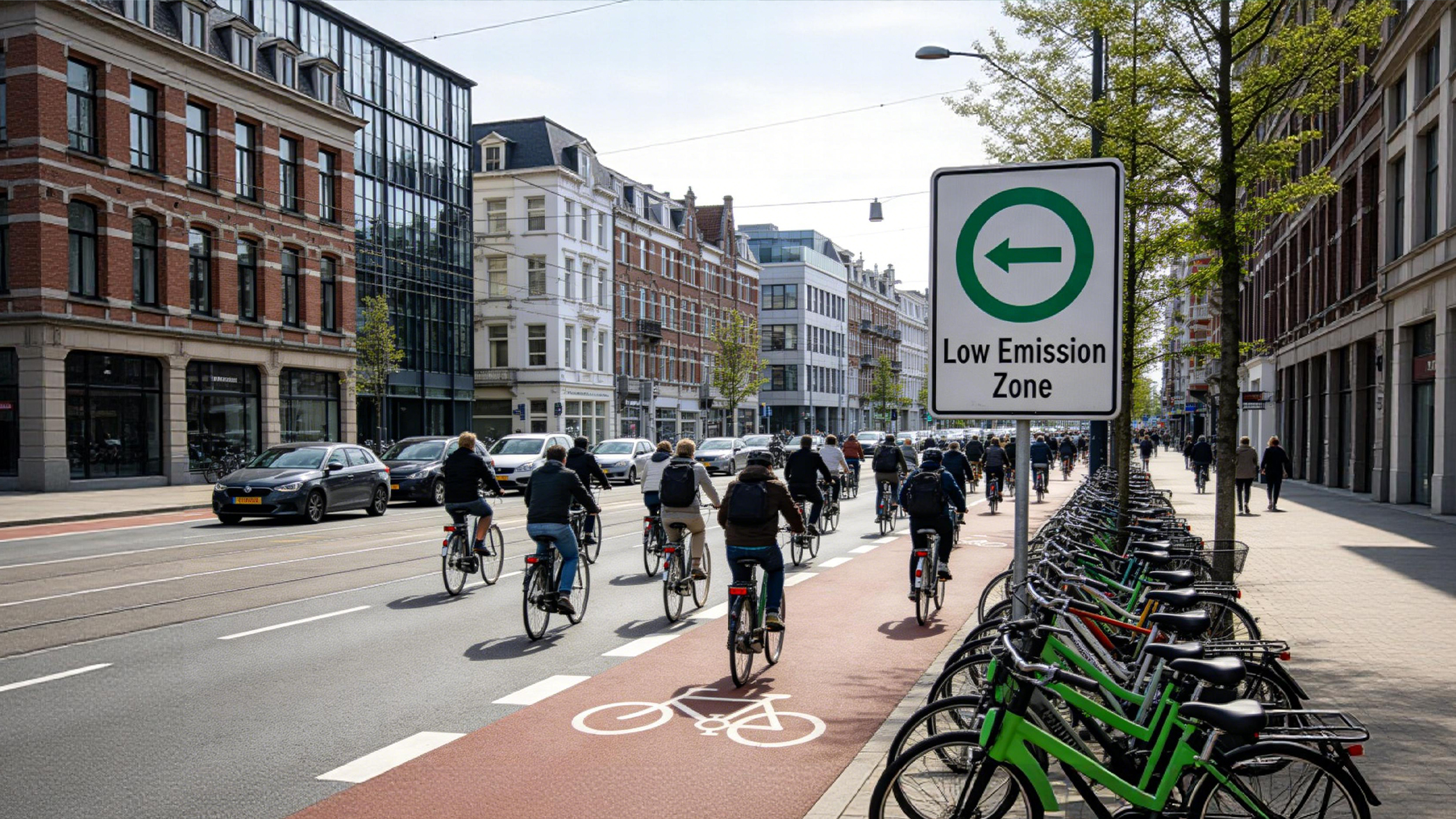
Many European countries and cities have accelerated transport electrification by establishing Low Emission Zones (LEZ), restricting high-emission vehicles in city centers, and improving cycling infrastructure.
According to Transport & Environment, over 300 European cities have implemented low-emission zones or similar traffic emission management policies.
| City | Policy Type | Implementation Year |
|---|---|---|
| London | ULEZ Ultra-Low Emission Zone | 2019 |
| Paris | ZFE Low Emission Zone | 2017 |
| Amsterdam | Zero-Emission Logistics Zone Target | 2025 |
| Milan | Area C Traffic Restriction Zone | 2012 |
European E-Bike and Micro-Mobility Market Enter Growth Phase
According to the Confederation of the European Bicycle Industry (CONEBI), Europe sold over 5 million E-bikes in 2023. Research institutions forecast a 16%–18% annual growth rate for the European E-bike market in coming years.
| Metric | Data |
|---|---|
| 2023 E-bike Sales | Over 5 million units |
| Total Bicycle Sales | Approx. 20 million units |
| E-bike Market Share | ~25% |
| Expected Annual Growth | 16%–18% |
Major European Countries E-Bike Sales
| Country | Annual Sales | Market Features |
|---|---|---|
| Germany | 1.8–2.0M | Largest European market |
| Netherlands | 0.8–1.0M | Highest penetration |
| France | 0.6–0.8M | Rapid growth |
| Italy | 0.3–0.4M | Largest Southern Europe market |
| Belgium | 0.2–0.3M | Mature cycling culture |
| UK | 0.15–0.25M | Potential market |
European Cargo E-Bike Market Expands Rapidly
Industry data show Europe’s Cargo E-bike market has grown quickly. Grand View Research reports a projected CAGR above 15% globally until 2030. Europe is among the most mature regions for Cargo E-bike applications.
Cargo E-bikes are widely used in urban last-mile delivery. Companies like DHL, UPS, and Amazon deploy Cargo E-bikes to replace traditional fuel vehicles. Research indicates about 25% of urban parcel delivery could be achieved via Cargo E-bikes, reducing congestion and emissions.
| Application | Typical Use |
|---|---|
| Urban Logistics | E-commerce parcels, courier delivery |
| Commercial Delivery | Retail and restaurant restocking |
| Urban Services | Postal, maintenance, community services |
| Corporate Fleets | Urban shared logistics |
As European cities increasingly require low-emission logistics, Cargo E-bikes are becoming an essential part of the urban electric mobility system, driving the growth of Europe’s micro-mobility industry alongside the E-bike commuting market.
E-Bikes Become Key Urban Commuting Transportation in Europe
With the continuous advancement of Europe’s carbon-neutral policies, future urban transport systems will place greater emphasis on diversified mobility structures. E-bikes, electric light motorcycles, and other micro-mobility tools will play an increasingly important role.
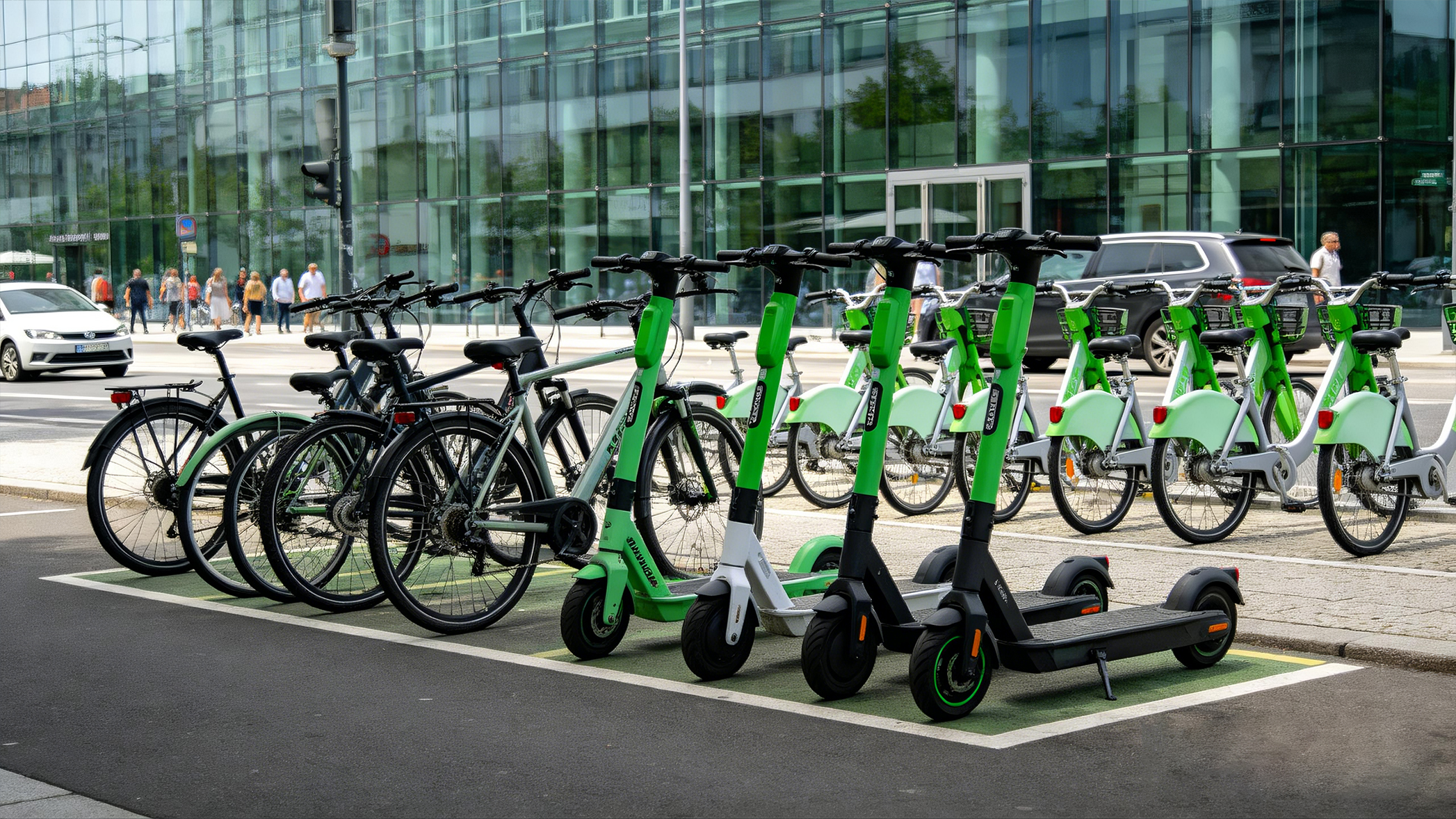
PXID Focuses on Green Mobility Trends, Driving Electric Two-Wheeler Innovation
Against the backdrop of Europe’s ongoing carbon-neutral targets, urban transportation is shifting toward more environmentally friendly and efficient solutions, offering new growth opportunities for the European electric two-wheeler market.
As a brand specializing in electric mobility and E-bike product design and development, PXID continuously monitors European electric mobility policies and urban E-bike commuting demand. Through product innovation and technology upgrades, PXID provides more diversified solutions for low-carbon urban transport.
Developing E-Bike Products for European Urban Commuting
As more European cities encourage residents to commute by bicycle and E-bike, electrically assisted bicycles have become important tools for short-distance urban travel.
PXID focuses on urban cycling needs in the European market during product design by optimizing frame structures, enhancing electric-assist system efficiency, and improving riding comfort. This provides users with E-bike products better suited for urban commuting. For example, PXID’s P5 Narrow-Tire Commuter E-bike features a 27.5×2.4-inch narrow tire design, optimized for European city roads, offering lightweight construction while improving riding efficiency. It is suitable for urban commuting and daily mobility scenarios.
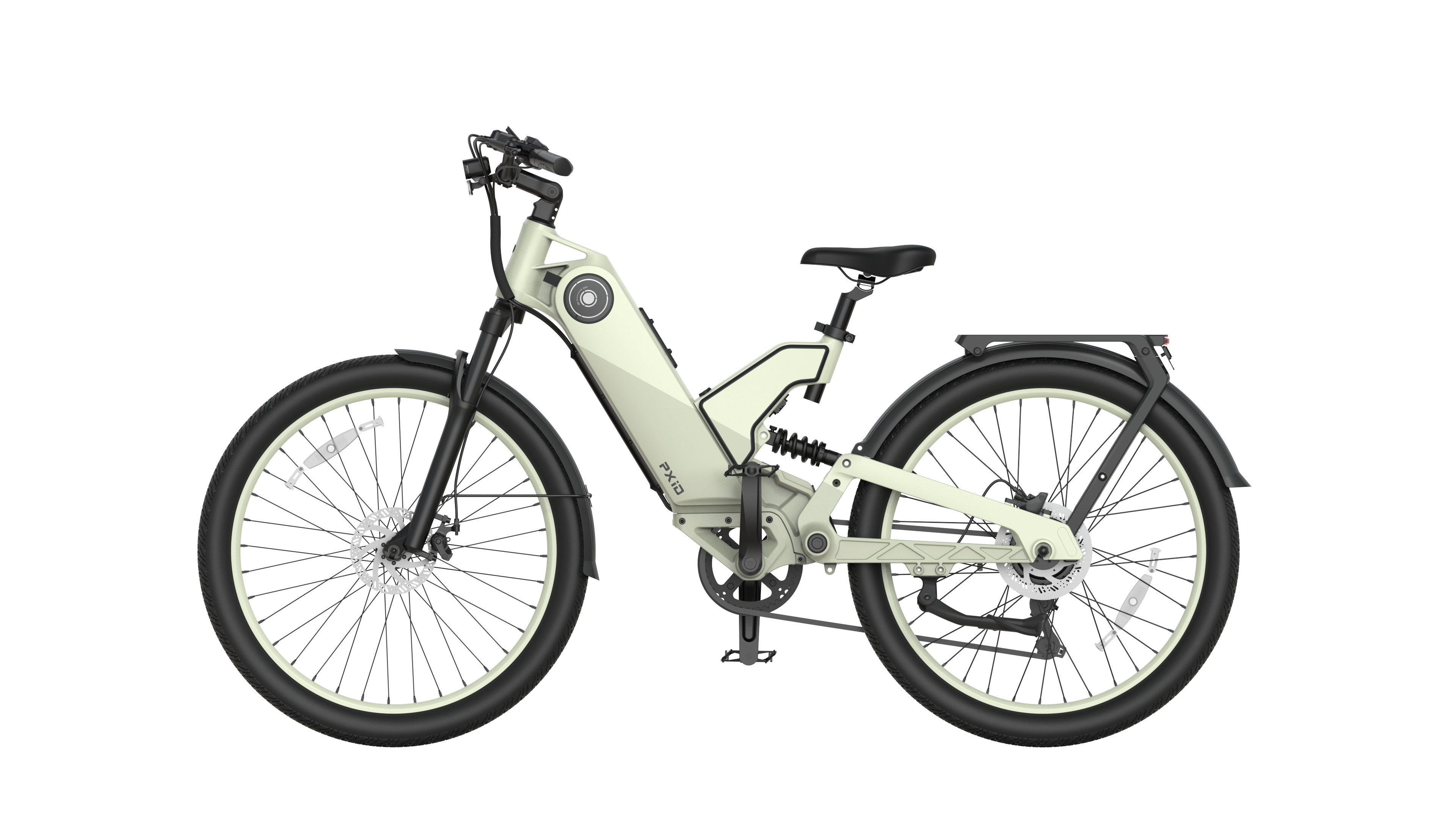
PXID P5 Narrow-Tire Commuter E-Bike Specifications
| Parameter | PXID P5 Narrow-Tire Commuter E-Bike |
|---|---|
| Tire Size | 27.5 × 2.4 Inch |
| Battery Range | 80 km |
| Assist Speed | 25 km/h |
| Motor | 60 Nm / 400 W |
| Battery | 36 V 15 Ah |
| Dimensions | 1907 × 720 × 1121 mm |
| Weight | 40 kg |
| Recommended Rider Height | 160 – 180 cm |
| Charging Time | Approx. 5 hours (full charge) |
Electric Mobility Promotes Green Urban Travel
As Europe’s carbon-neutral policies continue, electric mobility, E-bikes, and micro-mobility tools are becoming integral components of urban transport systems. In the future, with evolving urban commuting demands and continuously improved green transport policies, electric two-wheelers will play an increasingly important role in Europe’s urban transport networks. PXID will continue to provide more efficient and environmentally friendly urban mobility solutions worldwide through product innovation and design upgrades.

FAQ
As more cities adopt Low Emission Zones (LEZ) and zero-emission logistics policies, fuel vehicles face restrictions, driving rising demand for E-bikes and Cargo E-bikes. PXID optimizes power systems, frame design, and battery range to provide solutions tailored for urban commuting and logistics.
Cargo E-bikes access LEZs and zero-emission zones and navigate congested urban areas efficiently, ideal for last-mile delivery. PXID reinforces frames, improves battery range, and optimizes load capacity, helping logistics companies cut costs and reduce emissions.
Urban commuting E-bikes require efficiency, comfort, and regulatory compliance. Lightweight frames and narrow tires reduce rolling resistance while maintaining stability. PXID’s P5 Narrow-Tire Commuter E-bike (27.5×2.4-inch tires, 60 Nm motor, 36 V 15 Ah battery) meets 25 km/h assisted speed standards and offers ~80 km range, ideal for daily commuting, shared travel, and corporate fleets.
For more information about PXID ODM services and successful cases of electric bicycles, electric motorcycles, and electric scooter design, and production, please visit https://www.pxid.com/download/
or contact our professional team to obtain customized solutions.
 Facebook
 Twitter
 Youtube
 Instagram
 Linkedin
 Behance
 tiktok

