

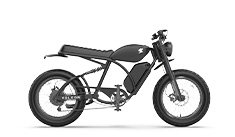

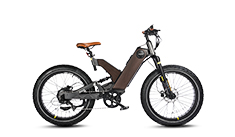

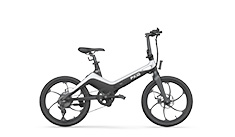

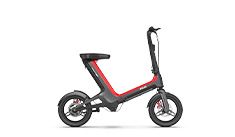

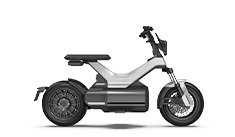

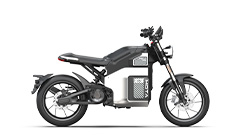

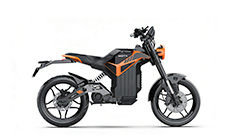

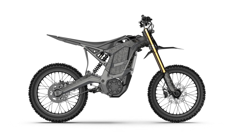






What Brands Should Prioritize
E-bike industry trends in 2026 point to a more demanding buying decision for brands: define a useful product, verify its electrical system, and plan how it will be serviced. German sales data and US channel research describe different markets, not one uniform global rebound. For importers and distributors, a broad growth forecast is less useful than evidence about the riders, price points and sales channels a new model must serve.

1 Read the market before expanding the range
ZIV reported approximately 2.0 million e-bike sales in Germany in 2025, down 4.8% year on year. Electric models still represented 52.7% of bicycle unit sales. Their average selling price across all sales channels fell 3.8% to EUR 2,550. These are German market results, published in March 2026; they are not full-year 2026 figures or a worldwide forecast.

The US picture illustrates a different problem: incomplete channel coverage. PeopleForBikes reported that its research identified roughly 450,000 direct-to-consumer e-bikes worth about USD 800 million in 2024 that conventional market figures had missed. That evidence concerns a specific channel and year. It should not be treated as an additional annual growth rate, or added to another dataset without checking for overlap.
José Maldonado, Chief Marketing Officer at PeopleForBikes, wrote in June 2026: “An industry that plans on partial data plans badly”. His point is especially relevant when a supplier uses a large global market estimate to justify a local product launch.
PeopleForBikes US market analysis 24 June 2026
For a brand, the practical response is to narrow the question. Where will the bike be sold? Which competing models are actually moving through that channel? What remains unsold, and at what price? A dealer-supported commuter and a low-price online leisure bike may compete in the same country without serving the same customer.
Ask for the definition behind every chart. Revenue is not unit volume; shipments into a distribution channel are not necessarily retail sales. A forecast should be labelled as a forecast, with its assumptions available for review. Those distinctions help keep a sales plan tied to evidence rather than to the most optimistic number in a presentation.

2 Choose a product around the journey
| Use case | Questions for the product brief | What to check on the sample |
|---|---|---|
| Urban commuting | Storage, carrying needs and charging access | Riding position, parking, lights and battery access |
| Touring and mixed use | Route length, luggage and support away from home | Accessory clearance, loaded handling and service access |
| Cargo and utility | Intended load, loading routine and parking space | Declared load limits, stability and attachment compatibility |
3 Verify the electrical system and its evidence
Battery safety should be reviewed at the level of the supplied configuration. UL Solutions describes UL 2849 as addressing e-bike electrical systems, including combinations of the drivetrain, battery and charger. A statement about a cell or a battery pack alone does not establish certification of that complete e-bike electrical system. UL 2271 addresses batteries for light electric vehicle applications, a different scope.
The distinction matters when reading a certificate. Check the model designation, supplier, listed configuration and relevant reports. A logo in a catalogue is not enough to establish what was evaluated. This is a procurement check, not a substitute for a certification body’s determination or the legal requirements of the destination market.

Keep a production reference sample and an approved configuration record. Review pilot units against that reference before increasing order volume. Record deviations while they are still manageable: an unexpected connector, a different control interface or a change in assembly sequence can create support work later. A documented decision is easier to follow than an informal agreement spread across several messages.
5 Prepare the next supplier conversation
The most useful supplier conversation begins with a short brief. Include the destination market, customer profile, expected retail position, intended journeys and sales channel. Then ask the supplier to explain its proposed configuration and the evidence needed before release. Keep commercial assumptions separate from engineering acceptance criteria.
1. Agree the sample evaluation. Define the route, load, functions and documentation to review. Record the conditions behind performance claims.
2. Review compliance evidence. Confirm the models and system combinations covered, and identify who checks destination-market obligations.
3. Set production controls. Agree configuration approval, pilot inspection, traceability and the procedure for material or component changes.
4. Define support responsibilities. Document warranty handling, parts identification, replacement supply

How PXID fits into the discussion
PXID develops electric bicycles, electric scooters and electric motorcycles, with services spanning product and structural design, electrical control development, prototyping and manufacturing. Our published capabilities include tooling, frame production, coating, assembly and testing. For an e-bike project, the useful starting point is the product brief and intended market, followed by an agreed development and validation scope.
About PXID | PXID development and manufacturing process
Explore our electric bicycle ODM portfolio, or send us your target market, intended use and project requirements. We can discuss which existing platform or development approach is appropriate. Configuration, certification scope, delivery arrangements and commercial terms need to be confirmed for the individual project.
PXID electric bicycle ODM portfolio | Discuss an e-bike project with PXID
About the author
PXID is an electric mobility design and manufacturing business. Its published service scope covers electric bicycles, scooters and motorcycles, with design, engineering, prototype development and production capabilities. This article combines cited industry evidence with practical product-planning analysis.
Sources and interpretation
Sources were reviewed on 21 October 2026. German figures refer to 2025; the cited US channel figures refer to 2024. The examples and supplier checklist are editorial planning recommendations, not survey findings. Historical safety research and standards descriptions are distinguished from current legal requirements. This article is not legal advice.
Frequently asked questions
What are the main e bike industry trends in 2026
For brands and importers, the priorities examined here are regional demand, practical product use, electrical system evidence and after-sales support. The cited German and US datasets cover different years and channels, so they do not establish a single global growth rate.
Does a certified battery mean the whole e bike is certified
No. Battery evaluation and e-bike electrical system evaluation have different scopes. Request documentation identifying the exact models and configuration covered. Confirm applicability with the certification body and destination-market specialists rather than relying on a catalogue logo.
Which e bike category should a new brand choose
Begin with the rider, intended journeys, storage and sales channel. A commuter, touring bike and cargo bike require different evaluations. Regional category shares can inform research, but they do not replace local demand testing or a sample review.
How should brands compare range claims
Compare the battery configuration and the test conditions, including assistance level, route, load and temperature. Nominal watt-hours help describe energy capacity but do not establish usable energy or riding range. Ask for a repeatable test relevant to the intended customer.
What should an importer ask an OEM or ODM supplier
Ask for the proposed configuration, sample evaluation plan, relevant test and certification evidence, production change controls, parts documentation and support responsibilities. Agree who owns each task before treating the quotation as a complete supply proposal.
Source links
Market evidence, safety scope, research and supplier examples are linked at the relevant passages. The sources below allow the reader to check the original context.
ZIV 2025 Market Data for the Bicycle Industry | PeopleForBikes US market analysis 24 June 2026
UL Solutions guidance on e-bike electrical system certification | OPSS and University of Warwick battery safety research 29 January 2025
Bosch eBike Systems update and service features | About PXID
For more information about PXID ODM services and successful cases of electric bicycles, electric motorcycles, and electric scooter design, and production, please visit https://www.pxid.com/download/
or contact our professional team to obtain customized solutions.
 Facebook
 Twitter
 Youtube
 Instagram
 Linkedin
 Behance
 tiktok


