









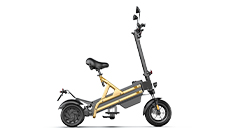

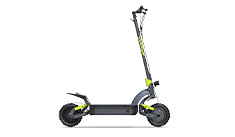

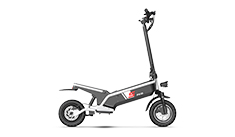

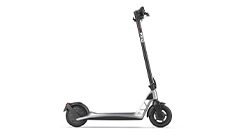


The global electric bicycle (e-bike) market has been experiencing rapid growth, driven by urbanization, environmental awareness, and the increasing demand for efficient electric mobility solutions. Alongside this expansion, governments and regulatory bodies worldwide have been updating safety standards, road access rules, and market entry requirements for e-bikes, electric scooters, and electric motorcycles.For manufacturers and OEM/ODM partners, understanding these changes is critical to ensuring compliance, avoiding market entry barriers, and maintaining a competitive edge.
Europe: Updated Standards and Market Access
Europe remains one of the most strictly regulated regions for electric bicycles.The EN 15194 standard continues to serve as the benchmark for EPAC (Electrically Power Assisted Cycles), but 2026 introduces updates emphasizing:
●Power and speed limits: Maximum continuous rated power of 250W and assisted speed capped at 25 km/h for standard e-bikes. Speed-pedelecs (S-pedelecs) are classified separately and require registration, insurance, and helmet use.
●Safety requirements: Enhanced testing protocols for brakes, electrical safety, battery protection, and lighting systems. Compliance with CE marking directives remains mandatory.
●Road access regulations: National regulations in Germany, France, and the Netherlands now include clearer definitions of bicycle lanes for e-bikes vs S-pedelecs, and updated age restrictions.
Manufacturers entering Europe must ensure product certification under EN 15194, conduct rigorous internal testing, and remain aware of local road rules to prevent legal liabilities.

United States: Federal and State-Level Updates
In the United States, federal and state regulations continue to evolve for e-bikes and electric scooters:
●Federal classification: The Consumer Product Safety Commission (CPSC) maintains the three-class e-bike system: Class 1 (pedal-assist ≤20 mph), Class 2 (throttle ≤20 mph), and Class 3 (pedal-assist ≤28 mph, helmet required).
●Safety standards: 2026 updates include stricter UL 2849 battery safety requirements, enhanced brake performance testing, and mandatory visibility features (reflectors, lights).
●State and local variations: States such as California and New York have introduced new e-bike registration and helmet mandates. Certain cities also regulate electric scooters and micro-mobility vehicles separately.
For OEM/ODM partners targeting the U.S., it is crucial to align design, testing, and labeling with both federal and state-level standards to avoid market entry delays.
Source: CPSC E-Bike Guidelines
Japan: Safety and Type Approval Updates
Japan's e-bike market emphasizes speed limitation, battery safety, and vehicle classification:
●Power and speed limits: Maximum rated output 250W, pedal-assist limited to 24 km/h. Electric motorcycles exceeding this classification require registration under the Road Traffic Law.
●Type approval: New requirements in 2026 focus on battery fire safety, insulation standards, and electromagnetic compatibility (EMC).
●Road use regulations: E-bikes must comply with defined bicycle lanes, helmet use for minors is mandatory, and motor-assisted bicycles require visible labeling.
Compliance with Japanese Industrial Standards (JIS) ensures smoother market entry for electric mobility solutions and supports future OEM/ODM collaboration opportunities.
Source: Japan Ministry of Land, Infrastructure, Transport and Tourism (MLIT)

Other Key Markets
Canada:Aligns closely with U.S. CPSC classification, but provinces introduce registration and speed rules. Battery transportation regulations have been updated following 2025 IATA lithium battery guidelines.
Australia: Introduces power assist limits of 250W for standard e-bikes and 200W for pedal-only e-bikes. Registration for higher-speed models is required. Local road access rules for micro-mobility devices continue to evolve.
Table 1: Comparative Overview of 2026 E-Bike Standards
|
Region |
Max Power |
Max Speed |
Safety Standards |
Registration Requirement |
Notes |
| EU | 250W | 25 km/h | EN 15194, CE marking | No (S-pedelec requires) | National lane rules apply |
| USA | 750W | 32 km/h | UL 2849, Class 1-3 system | No, state-dependent | Helmet required for Class 3 |
| Japan | 250W | 24 km/h | JIS, EMC compliance | No | Motor-assisted bicycles labeled |
| Canada | 500W | 32 km/h | CSA standards | No, province-dependent | Battery transport per IATA |
| Australia | 250W | 25 km/h | AS/NZS standards | Yes for >250W | Local road rules vary |
Impact on Export Brands and Compliance Guidance
Global electric mobility solutions providers face several challenges:
●Design alignment with diverse safety standards and speed/power restrictions.
●Ensuring battery compliance under multiple international testing protocols.
●Navigating local road access rules, labeling, and rider safety requirements.
Avoiding regulatory pitfalls requires early-stage certification planning, multi-region testing, and clear documentation of compliance, which can prevent costly recalls or market entry delays.
PXID Response Strategy
PXID proactively addresses regulatory complexity across regions through:
Product design adaptation: Modular frame and powertrain systems adjustable for region-specific power and speed limits.
Certification support: Internal compliance lab ensures alignment with UL, EN, JIS, CSA, and AS/NZS standards before export.
OEM/ODM solutions: Providing turnkey electric mobility solutions that meet global safety standards, facilitating faster market entry for B2B partners.
PXID’s approach ensures that e-bikes, electric motorcycles,and electric scooters are fully compliant, minimizing regulatory risks and enhancing brand reliability in overseas markets.

2026 marks a pivotal year for global e-bike regulations, with increased emphasis on safety, certification, and market access. Manufacturers and OEM/ODM partners must remain agile, integrating regulatory updates into product design and testing. By embracing these standards, the electric mobility industry can deliver safer, more reliable, and innovative electric transportation solutions worldwide.
FAQ
PXID aligns with EN 15194 (EU), UL 2849 (US), JIS (Japan), CSA (Canada), and AS/NZS (Australia) to ensure safety across all key markets.
Regional speed caps dictate motor output and assist thresholds. PXID designs modular systems to meet these requirements efficiently.
Yes. Compliance with UL, IEC, and IATA guidelines ensures safe battery operation and transportation.
CE marking, type approval, and test reports for electrical safety, braking, and EMC are essential. PXID provides documentation support for OEM/ODM partners.
Regulations vary. S-pedelecs in EU, Class 3 in the US, and higher-powered bikes in Australia require registration. PXID adapts products accordingly.
PXID conducts pre-shipment testing and internal certification for all target regions, reducing delays and regulatory risk.
E-bikes must comply with lane and helmet regulations. PXID designs products considering urban mobility requirements for each region.
Yes. PXID provides turnkey solutions and compliance consulting to support global market entry.
Updates occur annually or biannually. PXID monitors changes and adjusts designs proactively.
Yes. PXID applies safety, speed, and certification standards across electric scooters, motorcycles, and e-bikes for consistent compliance.
For more information about PXID ODM services and successful cases of electric bicycles, electric motorcycles, and electric scooter design, and production, please visit https://www.pxid.com/download/
or contact our professional team to obtain customized solutions.
 Facebook
 Twitter
 Youtube
 Instagram
 Linkedin
 Behance
 tiktok

